Thursday, May 6, 2010

Mules in the Pindari Valley

While trekking in the Pindar Valley, it is difficult to escape the mules and ponies. Their cheerful jingling wakes one up early when the loaded ponies set off. On the trail, they are everywhere. It is nice to meet the patient little beasts plodding up a path and exchange a greeting or two with the owners.

A slightly less pleasant aspect is the dung on the path..especially when it is buzzing with flies, but that is a cue to think, "ah! soil fertilization!" and carry on.

The ponies are for the large part well treated. they do lead a hard life, but so does everyone in the Himalayas. They are not very pet-able, but that is largely because they are used to being treated as working comrades rather then 'whosaprettyboy'.

The chai stall at Mallya Daur is a rest stop for the mules as well as a salt lick. And those guys do crave their salt! That was the only time I saw the ponies being aggressive towards one another. Mine!

In a tourism-driven valley inaccessible by road, everything is brought in on their backs. groceries, vegetables, carpets, machinery, furniture, clothes- Everything. Like all working creatures, the mules and ponies also appreciate their time off. I watched as a mule was unloaded in Dwali. The instant its harness was off, it went purposefully to a patch of grass and rolled onto its back. I could almost hear the deep and happy sigh. In the evenings, of course, the animals are free to do as they please. Tomorrow is another working day.

Friday, April 30, 2010

the best prayer I've heard for a long time

..the absolute brilliance of my life astounds me and I am so incredibly grateful for all of my co-travelers on this path.

Grumpy Granny in her latest post.

Amen

Wednesday, April 28, 2010

Eavesdropping..

Nothing good ever comes out of it, I have been told. And that's right.

Snippets of the things I heard during the electricity cut-out in the office today:

"I never buy from those people..they are all crooks"
"Yes, and look at the way they have infiltrated everything- welders, mechanics, fruit sellers. Can't escape them."
"My blood boils just looking at them"

And then the conversation moved on, and I was glad. But only for a short while.

"You should try dropping phenyl on spiders..they stagger around for nearly a minute before they die."
"Really? Does it work on other animals as well?"

M leaves in a couple of months to learn how to create a more just world.

C has the strange feeling she's going to be a little conversation-starved.

Monday, April 26, 2010

Guess who's in town!

The Westen Circus, that's who!

And no, that's not a typo up there- the circus' tickets, posters and internal signboards indicate that the name has nothing to do with compass points. The external hoarding , confusingly, calls it the Western Circus. Let's go the democratic way and follow the majority, shall we?

It's currently running 3 shows a day (1pm, 4pm, and 7pm) at the Parade ground, Dehradun and is more fun than I thought it would be. The excitement began early when we sat and waited for the show to begin. The tent was torn, but the light was perfect, and it felt as if we were sitting under the sky on a planet where the stars burn fierce and bright. Of course, I could be influenced by the naked enthusiasm of my colleague who was super-excited to be there, though he was a little disappointed that there were no elephant acts.

The circus does have a couple of elephants, but they seem to be mainly for welcoming the guests. I was happy not seeing them balancing on tiny stools. The sight of animals being forced -with cruel training- to perform acts always seemed a brutality to me. There are those who say that  Supreme Court ruling prohibiting animal acts has brought the circus to its knees. The argument that animal acts entertained the audience can also be an argument for bear baiting. It is more likely that our being accustomed to the digitized possibilities and perfection of television has made us insensible to live acts with all their humanity and this has led to the decline of the circus.

Because we are not used to seeing the black safety cable during stunts..here we do. We wait as the artistes set up their apparatus and test it. We see the chap sitting in the scaffolding away from the spotlight and making the acts possible. We see the man in charge of safety for the trapeze act bowing to each support before setting up the nets. 
The woman walking the tightrope was new, I think. At any rate she was unsure. A man walked by her throughout the act, hand outstretched in case she needed to grab it. She didn't , but I think that is because that hand was there ready and waiting to help. She didn't make any mistakes, didn't drop any of the crockery she was balancing on her head.

And that was pretty much the exception, because these artists do make errors. They drop the objects they are juggling with, miss passes, drive their cycles straight into the poles. But then they redo it till it is perfect. And yes, the applause then is louder, the audience seeing themselves in a human who commits errors. There were times when I felt that these errors were part of the act, because showmen are nothing if not masters of psychology. But it doesn't matter. All this makes the circus what it should be- a celebration of human skill, perseverance and team spirit.

The clown acts too, had the theme of the underdog who wins. And this made the audience respond with victory cheers. I need to admit though, that I am always uptight and uncomfortable around the circus clown concept. The whole idea of hiring someone who is fatter/thinner/shorter/taller than a mythical perfect for the job of being laughed at is disturbing to me.


But I should not be talking of acceptance, because to my utter shock and shame I realized that I have size-stereotypes. Me! I should be the last person judging people by their appearance! This was a bitter pill, alright. Two women ran into the ring for what I realised to be a contortionist act. One of the two had a body that fit in with what my assumption was a contortionist needs to be: petite. The other did not, and I found myself assuming that she was there in an assistant role; this assumption was strengthened when she stood there as her thin friend put her body into a series of knots . Another one of those times when I am gladly wrong, because she turned out to be the star of the act. She did all that was done earlier with a glass full of water on her forehead.

But this circus was non-discriminatory in other ways as well. The only gender-specific things I saw were the initial parade (women) and apparatus carrying (men). Most other roles were handled equally, including sharpshooting. It also did not discriminate between its audience, enthralling all equally.

There was an additional treat in store for me. Throughout the show, various vendors came by with things to eat and drink. None of those tempted me. Until, that is, this came along.
Cotton candy. It's pink and fluffy. It's  made of sugar and some strange fluorescent chemical dye. What's not to like? I liked very much.

Sunday, April 25, 2010

The love of a good man..

can work wonders. Not that I think Mian married me to reform me (you didn't, right?), but he has helped me overcome a lot of the 'I cant do that' block I had.
Take my kitchen for example..I am a passable cook, but had accepted that I can't make breads in any form- leavened or otherwise. Pasta (which counts as unleavened bread in my book) would sometimes be made from scratch, but those were definitely special occasions, and the preparation would begin with buying flour. Yes, flour never formed a part of my pantry.
And then Mian came along with his love for the sensuality of bread making. I watched him make tons of bread for the simple pleasure of it and realized that it's not actually a dangerous process. He taught me how to knead, gave me a love for the smell of fermenting dough, and left our kitchen stocked with far too many flours (whole wheat, refined, corn, rice, millet, buckwheat, amaranth) and enough yeast to colonize a planet.
Last week, I returned from the Pindar valley hungry for good food but too tired to do anything remotely complicated.  Nothing that requires me to step out of the house, I decided. Nothing complicated, nothing requiring me to slave. And so I made this:
 My new go-to food for when I am too tired to cook. hm.
and today for lunch, it was this:

This was so good. It took me about an hour, of which less than half was actual work time. Everything needed for this was already in the kitchen, and the end result was heaven- thin, crisp crust with caramelly, salty, intense topping. Please, make this.
Base: I didn't really use a recipe. This is a good one with hand-holding for the technique, which is the kind of bread recipe I like. I mixed one three-fingered pinch of yeast and a pinch of sugar in a little water and let it proof till I finished the dishes. Added to it one cup flour, a pinch of salt, a splash of oil and enough water to make a soft dough. Kneaded it till there were no cracks, coated the ball with oil and let it rise for a little less than an hour. Preheated the oven at the hottest possible. Oiled the lid of our kadhai, and stretched out the dough on that. Loaded with toppings, and let it cook for maybe 15 mins till the bottom of the crust was brown.
Toppings: Tomato sauce made by reducing blanched tomatoes with some dried fish (softened for 10 mins), garlic, salt, crushed red chilies, sugar. Onions and capsicum that I had sauteed till brownish. Olives.pepper. salt. some oregano.

not too much work for lunch, dinner and absolute bliss, eh?

Thursday, April 22, 2010

The chai stalls of Pindar Valley

On the Pindari glacier trek, the major landmarks are chai-stalls. And it was interesting to me to see how unlike on the pilgrim treks, there is no mad proliferation of competitive stalls. Each stage has its little family-run establishment that is basic, comfortable and has its own unique selling point.

Take the first one on the route. This is run by a pair of brothers, and all they sell are chai and eggs. And actually, that is more than what is required. The place is strategically located -in terms of distance and time from Loharkhet- where all one wants is chai.


And after that is a more plush one, approximately half way between Loharkhet and Dhakuri. This one has maggi noodles, eggs, chai and cold drinks. I did not find it especially pretty, but it seemed to be an important news exchange point.

And at Dhakuri, you get lunch! Dal, rice, potatoes, and chapaties if you ask nicely.


At Wachum, it's chai and if you are a resident, drought relief compensation.

Mallya Daur, now deserves honourable mention. Unlike the previous two, there is nothing else at Mallya other than the chai stall. The chai stall IS Mallya Daur. When the present owner retired from the army, he took over from his uncle who ran it earlier. In addition to a chai and maggi noodles place, it is also the loading depot for the non-timber forest produce collected by the locals. It is a rest stop for muleteers and a salt lick/grazing stop for their charges. It is a contact point for pastoralists, and a first aid centre in times of trouble.
 Chai stalls are important on the Pindari trail. Nearly all travellers stop at each one irrespective of whether or not they want tea. There is not more than half-a-day's lag in news from one end of the valley to another, and that makes the chai stalls most efficient and energy-efficient transmission devices, na?

Wednesday, April 21, 2010

Of bugyals

As the uttarakhandandies* were asking..

Bugyals are what high altitude (>3000 m above sea level) meadows are called in Uttarakhand, with the Valley of Flowers being the most famous one yet.
Think of a patch of flat land  nestled among the mountains. This patch has been carved by an old glacier. It covered a valley with the fine matter it scraped off the surrounding mountains and brought down smooth boulders to punctuate this land.

This left the mountains bare and polished; the ground received a thick layer of soil.

Over the years, plants grew and died and added to the organic content of that soil. This land is covered with snow for a large part of the year.But come summer the snow begins to melt, forming little rivulets and adding moisture to the combination of warmer temperatures, longer days, and rich soil.

Things begin to grow then.

This season is necessarily short, and the plants know it. There is a race in summer to grow! live! procreate! The plants here are uniquely situated to these harsh conditions. The two main strategies for survival are:
  •  Condensing life into one short glorious defiant burst before returning back under the soil as seed or bulb.

  • Hunkering down and surviving all that life throws at you; growing slowly, never rising high enough to challenge the wind, never attracting attention, but never giving up either.

Due to the abundance of food and the remote locations, bugyals are the home of many animals: the bharal, the thar, deer, leopards, bears, hyrax, hares, and also of birds. Even if the animals are elusive, they leave traces of their existence. The paths are marked with spoor and exposed earth where deer and bears have hunted for roots.

Recently-in glacial terms- humans came to know of bugyals. What a wonderful place to fatten sheep! And so there is a tradition- as there is in all mountain regions- of shepherds taking their herds up to the meadows for the summer. Normally, there is enough. But when have we been content with enough?

The herd size is increasing over the years, and now there is severe competition between the invading herds and resident animals. Meadows are regularly set fire to in order to promote the growth of grasses (like eulalyopsis, seen in the pics) favoured by sheep.
This practice does promote growth- but only of heat resistant species. The more delicate herbs and bulbs do not survive. Over the years, this leads to a change in the ecosystem composition from a mix of herbs and bulbs  to a grasses-dominated one. The lives of the shepherds are dependent on feeding their herds, and it is difficult to deny them their livelihood. I strongly agree. But I also believe that each ecosystem is as much a complex, living, sentient entity as a human is and deserves the fundamental right to life. It will be a sad day when there are no magical flower strewn meadows to dream about.


* Love that term!

Sunday, April 18, 2010

Trekking in the Pindar Valley

The stories follow, but should you be planning to go there (and you should), here are the basics:
Where?
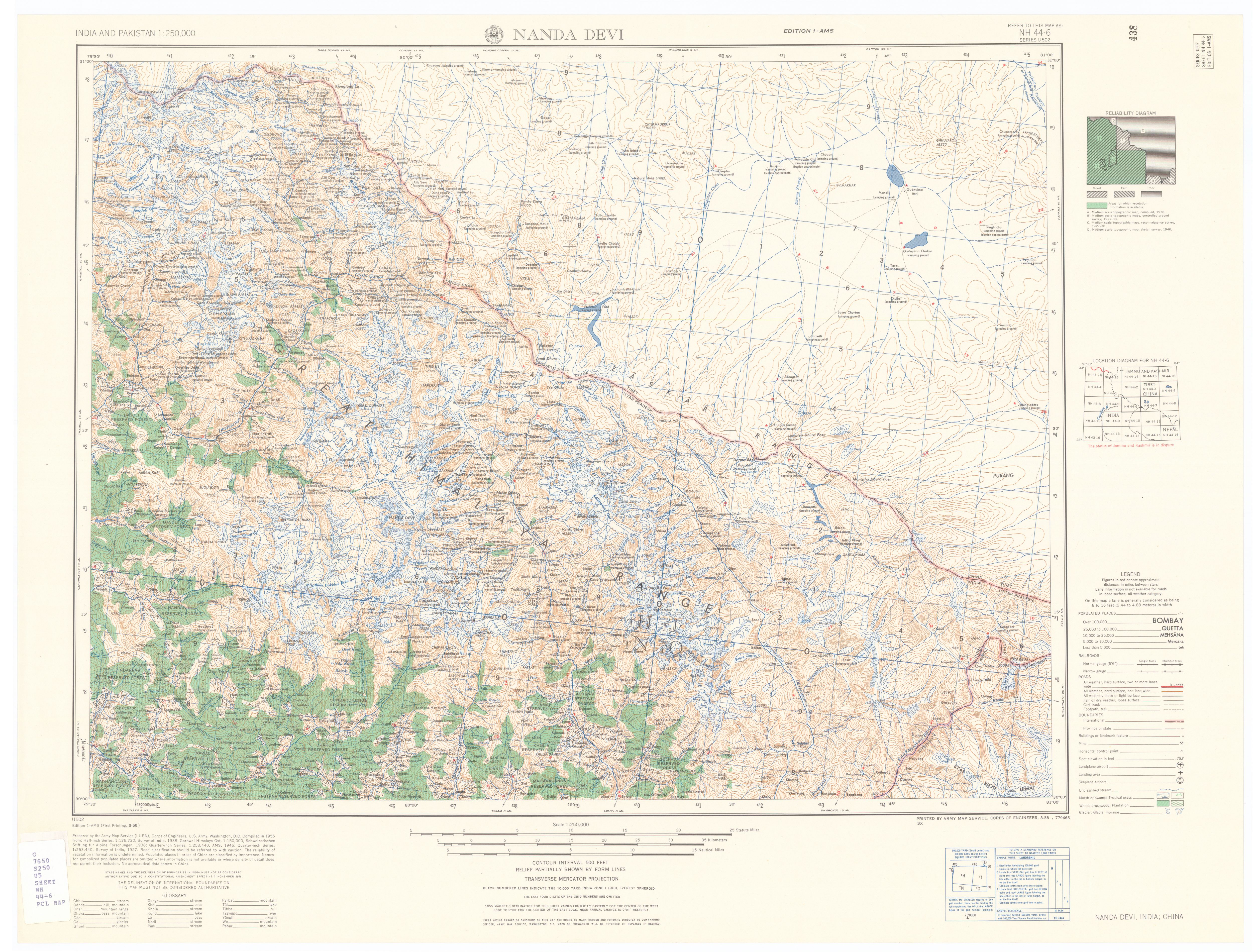
The Pindar valley lies to the north of the town of Bageshwar, in Uttarakhand. You can see it online, or if like me you prefer good old fashioned contour maps, the picture below is from nh-44-06, available here.
When?
May and June is 'The Season'. The flowers are in their hundreds, but so are the tourists. Earlier than that, all the flowers in the bugyals are not in flower, but the rhododendrons are, and the relative solitude is definitely worth it.
How?
The motorable road goes to Loharkhet, from where your trek begins. You can drive up all the way there, but the public transport way is to take a train to Haldwani (the Kathgodam Express from Dehradun, or the Ranikhet Express from Delhi). Take a share-taxi to Bageshwar (300/-, and expect to change cars at Almora). Once there, you will have to hop the share-jeeps in 30-10 Rs instalments (Bageshwar-Bharadi Bazaar-Song-Loharkhet), or splurge on a 'booking car' to Loharkhet from Bageshwar (1100 Rs). That's expensive, and the share-taxis not only make for environmentally friendly car-pooling, but are very pretty too. If you like masses of fake flowers, that is..
Then what?
Then you start your trek. If you leave Haldwani at seven-ish, you'll probably reach Loharkhet a little before 6 pm. You can elect to stay either at the KMVN guesthouse or as we did, stay in the forest rest house. This is prettier, friendlier, and cheaper. The accommodations are dorm-type, but we had the place to ourselves. Here is a snap..
Why?
Eh? Because it's there! Actually no. There are a hundred saner reasons.
Because this is the easiest trek to actually touch 3860 masl.
Because one can watch Thar prance about on sheer rock cliffs
Because there are more Monal than you can shake a stick at- not that you would do it, of course.
Because it is good to realise that a watch has no relevance here, to wake and sleep with the sun.
Because it is even better to pause in the middle of a walk and realize that you are the only human in a kilometer's radius.
Because the road from Loharkhet to Kafni passes through forests of oak, rhododendron, horse-chestnut, fir, deodar, more rhododendron, juniper, and so on to the high altitude grasslands.
Because there is more concentrated beauty here than I've ever seen.

Missed me?

Am back! Still have knots in my calves, but am now clean and caffeinated. Will post the trip details and stories soon, but in the meantime:


This is Maiktoli Peak (6804 m), and I clicked this photo on my way back from Khati Village.

Monday, April 5, 2010

Have project..

Will travel.

I am off again, for nearly two weeks. I hope to be back in Dun on the 18th, though I might be too preoccupied with excavating the dirt under my fingernails to do any posting then..yes, too much information, I agree.

So let's talk of prettier things..
I am going off to walk in the Pindar valley. My colleague and I will be conducting a baseline study in three mid-altitude villages (2500-3000 masl) in the valley. We will be staying in the villages, chatting up strangers, counting flowers in meadows and measuring flows in springs. While not strictly work related, we also plan to squeeze a half day out and go as far up on the path to the glacier as is possible without any technical know-how: the Zero point.

Tough job, but someone's got to do it.

I will of course be posting stories and pictures when i return, but till then, here is a good account of the same trek.

Thursday, April 1, 2010

Snarl!

I tend to stay away from rants, activism and politics on this blog, but now it's getting personal. How can the world hound a crush of mine and not expect me to take up arms? 'The world' is a bit of exaggeration. It is a small section of the world..But that does not mean that I cannot snarl in protest!

Jairam Ramesh, our minister of environment and forests is being upbraided for..well, for doing what he is supposed to do. One of the responsibilities of the MoEF is to assess the environmental impact of large infrastructure projects and accordingly give clearance to them. Sadly in the past, our government has only read the 'give clearance' bit. Today, we have an official who truly understands his job and is willing to do it. Instead of being commended, Mr.Ramesh is facing flak from cabinet ministers and from the Prime minister's office 'for delaying clearance'. He has been called, among other things, a 'green roadblock'.

A part of my job entails scrutinizing the environmental impact assessment reports submitted for hydro-electricity projects. These have made me weep. These are ideally, meant to be written to present an objective assessment of the projects concerned. Objective, hah! The remuneration of the EIA consultant is subject to approval of the project, which is a strong incentive for 'pushing' the project instead of 'assessing' it. Further, the reports have been written assuming complicity on the part of all its readers. Which means that there is not even an attempt at appearing to be honest, leave alone being honest. Large paragraphs are common to several project reports- irrespective of suitability. Over  and over, the assessment is contained in one sentence 'this project has no negative environmental impact'. Damming a river, in the Himalayas, in a biodiversity rich, fragile, landslide prone cannot have NO impact. The reports are full of blanket statements like these,and Mr.Ramesh's insistence on accreditation indicates that he has read them.

I am a fan- a delirously swooning, cheering fan-  of Mr.Ramesh's based on his statements in the press and what little I've seen of him. There was his statement on taking office that ' a 98% clearance rate of projects by the MoEF is a sign that the ministry is not doing its job' which had caused M and me to do a little jig around the office. He attended part of a seminar I had gone for, and had come for it on time and having read the report and reflected on it. That is almost unheard of in India. During the Bt brinjal issue, he took the trouble to have several public meetings, and gave democracy a fighting chance. And now there is this.

Shabaash, mere Jairam!

(Thanks to cats-and-facts dot com for the image)

Tuesday, March 30, 2010

A conversation

ME: You've finally arrived! welcome! I am so glad!
(THEY preen)
ME(annoyed tone): But you took your time, didn't you? You should have come three weeks ago!
THEY: Look, It was too cold for us. Anyway, it wasn't the right time.
ME(petulantly): But I wanted you when the Mian was still here!
THEY(scornfully): Listen to yourself! You preach to the world about environmental flow regimes and then want us to accommodate your Mian's travel schedules! And your whims, we might add..
ME: but.. but..
(slinks away)


My basil just sprouted. Am already planning pasta with tomato sauce, toasted pine nuts. strewn with fresh, fragrant, green-ness.

Wednesday, March 24, 2010

Kanwadiya

I had mentioned the Kanwad mela fleetingly earlier, and had promised you a fuller write-up. It took me a year and another mela, but here we are.

The event:
Every year in the month of Shravan(jul-Aug) and during Shivratri (in Feb)*, millions of people come to the Ganga to carry water back to the temples in their towns. This water is used to anoint Shiva, who presumably would otherwise feel neglected by Ganga. The name for the Mela comes from the bamboo yokes that people use to carry the water in. The pilgrims are called Kanwadiya while their Kanwads (kanvad, kaanvad) are carried on their shoulders. Both can be seen in the picture below.

The Rules: Traditionally people walk to and from their villages, either fasting or living on an austere diet of fruit and milk. The Kanwad with its precious load is not supposed to be set down on the ground, and so teams take shifts, or rest propped up against trees and posts. Haridwar is the most popular place to carry water from, but we also saw a great many pilgrims at 'lesser' ghats like Soron and Bithoor.

The Loopholes: where there are humans, there must be loopholes, no? and so now many kanwadiyas travel by cycles, motorcycles or in vans. Judging from the vast arrays of sticky fried foods at Bithoor, kanwadiyas now no longer restrict themselves too much- though no meat still is important. There are other changes too, largely to do with the focus of the mela and is dealt with here .

The Good: The mela is a good way to bring the river into focus, when it is usually sidelined by temples and assorted gods. Repeat visits to the river help create awareness of the threats to it. Some of the most aware respondents we met were kanwadiyas. Once a male-only event, increasing numbers of women are participating in it.

The Bad: The mela is being usurped by youth groups looking for a good time in the name of religion. These groups largely come in the vans, a phenomenon known as 'Dak Kanwad' - the postal kanwad, a reference to the speed at which they travel. Flush with the arrogance of surging hormones and the holier-than-thou attitude of pilgrims, they essentially go on a rampage. Rash driving, 'shopping' without paying for goods, traveling ticketless and beating up people are the norm, and there is very little the police can do, assuming they are willing to 'interfere in religious matters'.

The Ugly: Pollution. Look at the picture below.

The Beautiful: I didn’t want to end on a negative note, and anyway I wanted to share these things with you.
These are the bottles in which the Kanwadiyas carry water home. Beautiful, fragile, hand-blown, multicoloured bottles at Re 1/- each. I bought 5 and carried them home scarcely daring to breathe on them.

The kanwads themselves. These are lavishly (and to be honest, garishly) decorated by the pilgrims with ribbons, braid, sequins, plastic peacocks (!) and foam rabbits (!!). There is something sweet in watching these tough men debating the virtues of a pink bunny over a yellow one. There is regional variation in the decoration, and the one below is at Bithoor. For a view of the bunnies in vogue at Soron, look at the second photo in this post.
For a lot of the pilgrims, this was a way of reconnecting with their soil and their friends. One of the people I spoke with worked in a mill in Surat. Every couple of years, he and a friend took enough leave to walk remembered paths together and perform a small service for their village deity.

* Thank you very much, Kavita, for pointing this out.

Thursday, March 18, 2010

I, Navigator

What I like about the Mian-and-C partnership is that we are so gloriously complementary. I cook, he bakes. I oversalt, he undersalts. Statistically speaking, we are perfect.

And this is extremely obvious when it comes to a sense of direction. I consider Brownian motion to be a valid navigation technique, Mian is a geographer who goes through this world with a precise sense of his location at any given time. (He also gives directions like 'go north-northwest from pt A for 200mts before turning southeast..' but that's a whole different story, and how could you not love a man like that?)

But this sense of direction meant that I was pretty relaxed when the two of us set off to Delhi Airport and our driver S confessed that he 'approximately knew the road to Delhi, but not how to enter the city or where to go once he enters it.' As I have said, my Mian knows his roads.

He however was worried about how S&I would be able to find my way back home. I got thoroughly coached in the route from the Delhi Airport to our little corner of the world. Several times. Till even I felt reasonably sure I could get back without taking the scenic tour. Despite that, when Mian told me to mail him when I reached home, I couldn't resist saying "Or if we end up in Jaipur instead, I'll just send you a postcard."

Anyways, we reached the airport in good time. S stalled while Mian and I hugged our goodbyes and sorted out our luggage. And then, I got in the car to go home. Only instead of going ahead to the exit, S tried to make a u-turn on a one-way drive, got stuck, set a dozen cars honking and screeching, and attracted all the security guards in the vicinity. So much for establishing our competence as a driver-navigator team in Mian's eyes.

But this meant that instead of getting teary-eyed over a farewell, Mian and I were laughing till our sides ached.

And yes, S&I did manage to get onto the Delhi-Jaipur highway, but fortunately managed to get back on the right track before we came across any vendor of Rajasthani postcards!

Tuesday, March 16, 2010

India.

I have spoken about the heart-breaking poverty and social injustice in Kachla and Bithoor.

And at first glance, a little habitation I came across in Kachla seemed the embodiment of these two things. The vulnerability of the houses to the elements and their decidedly unhealthy location next to a stagnant pond shocked me. The houses arein the floodplain (next to the river bed, in fact) of one of the largest rivers in the world,and I thought of how the floods must impact these households for three months of the year, every single year. Having spoken to the other respondents, I now had a sense of the utter injustice they face every day. All that the Government claims to provide for its citizens- right to employment, right to primary education, right to health, and even the most basic right to life- is denied these families. The lack of a door for the house is poignant in its admission of having nothing to lose.

But then I was struck by how houseproud the family is. There are times when my house is not as neat as this courtyard. The floor is clean, the refuse has been disposed off out of sight, and the bedding is soaking in the sun. I do not intend to romanticise poverty, but to point out that dignity has nothing to do with externalities.

And above all, quite literally, flies the national tricolour. The nation has failed this family and a million such families-and still they are proud of it. I crib in public because I am having difficulties with registration.

I wish now that I had walked up to this woman, spoken with her, asked her of the flag. But on the other hand, maybe it is good that I didn't..

Thursday, March 11, 2010

A morning in Delhi

It happens often that I have a meeting in Delhi at 1100 am, and my train pulls in at 0530. Which means that I have 4-5 hours in Delhi when no cafes or shops are open. Previously, I would either sit in the railway station, or walk around Connaught place. Pleasurable, but everything paled when Mian introduced me to Karim's.
So the last time I was there, this is what I did.

I was travelling onwards to Bareilly (the train was around noon), and had a lot of luggage with me. First thing, then is to get rid of it. I checked  it in the luggage room at the station. Then caught the Metro to Chawri Bazaar.

Once there,I got out of the metro station- which is pretty deep, 6 flights- and found myself at the intersection of five roads. I asked for the Jama Masjid and set off. That walk was fascinating. I don't have pictures,because the most interesting things I saw were people. There were the 'barber shops' that were even more makeshift than the hole-in-the-wall joints that are so common everywhere. These consisted of implements laid out on a handkerchief on a handcart, in a doorway, on a pavement. They were busy too, with people getting a shave or a haircut- at 630 in the morning! There were bustling breakfast joints, and shops that were waking up. I couldn't help but compare the bustle of earning a livelihood here with the sleek fat-cat attitude of CP or South Delhi..

But then I stopped thinking, because I came across this.
 Architecture needs to be utterly magnificent if even scaffolding cannot mar the cleanliness of its lines. The Masjid-e-Jahan-Numa is that and more.

 But I am nothing if not a woman with a strong sense of priorities. And so I resolutely turned right when the road ended at the mosque's wall, then around the corner of the mosque, and then right again into a little lane, and then left into a little courtyard and so at Karim's . The scintillating, mouth-watering, awesome Karim's who cook the same luscious food for backpacking, unkempt me that they once did for the Mughal kings. It was only after I breakfasted on Nahari and roti (dinner for breakfast! the decadence of it all! wah!) that I thought of architecture and other such things.

But I am glad I went. The courtyard is huge, and the sandstone glows in the morning. There are several people walking, sitting, and gently starting their day. And I loved the monks meditating here. That is so India..
But the space is not just for people. There is a specially designated area (marked as a yellow rectangle) for pigeons where there is water and people feed them seeds.
The rest of the courtyard is used for prayer, but here they are allowed to mess around, and hang out in peace.
Largely, in peace anyway. As I was watching them, I noticed they were being hassled a little. It might have interrupted their conversation, but the effect was rather lovely.
The cause of all that upheaval? This little troublemaker..
Sitting in the couryard was beautiful ,and interesting, and peaceful. Earlier the morning hours would drag for me. This time around, I almost didn't catch my train!


Wednesday, March 10, 2010

Gearing up..

0850 am.

I should be rushing around the house in heels straightening things, giving lunch the last finishing touches, thinking of the work I need to finish today.

Instead. Mian is away for the day and  I am in my home-alone pjs trying to make a coherent post of rambling thoughts. The plants are wilting, the house is in disarray, and I am afraid to know what the mess of things I threw into the pressure cooker has turned into. And yes, I had lemon curd and bread for breakfast. Without using a plate or anything to catch the crumbs. In bed. Specifically, in Mian's side of the bed. Where I am still lying in a tangled heap of blankets and cables and from where I don't want to move because I will then have to confront the rest of the day. Work is a little less than inspiring these days. Largely because I need to put on my managerial cap and seek funding, and I have already searched the sources I could think of only to come up empty.

But let's not fool ourselves.

The real reason I am grumpy, of course is that soon I move into the 'single woman' part of my year. Don't get me wrong. I like this setup where both Mian and I try our damnedest to fit as much as possible into each 365-day cycle. I like how we put extra effort and creativity into maintaining a living connection through google, and skype, and bhartiya daak. And I like how this together-apart cycle helps me appreciate both the joys of having a space of my own and of living in a happy bubble with Mian.

But I am so used to him now..

The idea that maybe I actually won't have time to make stuffed brinjal for him is making me grumpy. The realization that I have let a great many full-moons rise and set without having that moonlit picnic I have wanted for nearly a year and now there wont be any more opportunities for the next six months is making me even more grumpy. And when I get grumpy, I sulk and snap. And when I sulk and snap, I regret it. And when I get regretful, I get grumpy..

I think I will just go back to bed now.

Saturday, March 6, 2010

On piety in Kachla

It is a pretty pious place, I have to admit.

I might be too cynical (and too aware of pollution issues) to actually bathe like the woman above, but I have to admit to great beauty.

And when I look across the plains and reflect that people have been praying here for centuries, I also am moved to reflection.

and it is not just humans, apparently this impulse moves monkeys too.

But not mynahs, who seek no more than to lurk in the shade and look for food. And yes, have a rollickin' social time when at it.

and certain surveyors are moved more to Art than contemplation..

Wednesday, March 3, 2010

The mating season

No worries, people. This is still a UA-rated (that’s PG for you MPAA fans) blog. However, this is not a UA world. Spring is coming to Dehradun these days and pretty much everything has only one thing on its mind. As Terry Pratchett said in Monstrous Regiment, this is the time when all the world is shouting ‘have sex with me! I can make my chest big and red!’.

There are fruit trees blossoming here- lychees and mangoes- scenting the air with their heady and unabashedly sexy aroma. The birds make me laugh as they fight for space on vent pipes and bare trees- all to display their charms to the best possible effect. And the birdsong! Around our house it’s mostly the magpie robins and the red-vented bulbuls. But they are there in magnificent numbers and even more magnificent enthusiasm.

There is a pair of pups that I am friends with. While at first I would only tolerate them, I have become extremely fond of them since I returned from UP. During the fortnight he was alone in Dun, they would greet my Mian every day with much joy . Well, one of them is pregnant. Now she has disappeared, presumably to care for her pups, and the other has hit the dating scene far from home. I miss them on my sabzi-shopping rounds.

And in a fortnight my Mian leaves. I will miss him on my sabzi-shopping rounds too..

Tuesday, March 2, 2010

Why I wouldn't live in Uttar Pradesh

Visiting, yes. Living, no.

And here is why..

There are far too many guns around. And people apparently don’t believe in discreet pocketable guns. Here, size does matter. And they are pretty nonchalant about that too..people roam the streets with ancient rifles carelessly tossed on their shoulders, and no one blinks an eye. No one, that is, except the two researchers with fraying nerves. Here is M trying to forget that she is asking sensitive faith-related questions of an armed crowd.

Nothing underlines the ubiquitous nature of the gun-culture in UP as the shops where they are sold. I am used to dedicated arms shops with 'no loaded guns allowed' signs posted everywhere, with lots of transparent glass and other security measures. But look at the shop below. Guns, mobiles, toys and cosmetics- something for the entire family.

And then there are the everyday experiences.
 In the few days that I spent there, I saw far too much misery. There are far too many underage mothers..including a grandmother who was not more than in her late thirties. It was clear when I spoke to the people that there is massive siphoning of government funds into private pockets. The meal a day, anganwadi, local schools nothing functions. And then there is the violence. Too many arguments are settled by fights. And for too many people, the options are just to hunker down and accept the blows.


On day three of our surveys, we decided that we haven’t spoken to enough farmers, and need to meet some of them. Now this being a pilgrimage spot, farmers were pretty rare. And so when B, one of my colleagues, saw a pair digging far across the plains, he dashed off to add them to his trophy bag, so to speak. As he was running towards them, he realised that their agricultural technique was a little unusual. One of them was taking snaps of the event while the other was burying the corpse of a young woman. Sadly for B, there is no cover on those wide, treeless plains, and so he didn’t have the option of suddenly changing course or diving for cover. And so he had no option but to keep running till he was close to them. They were hospitable enough, and did not seem to mind an unexpected observer. The corpse was that of a sixteen-year old girl, they said, daughter and sister to these two. B prudently refrained from asking such questions as why was the burial in non-consecrated soil far away from everywhere, why only two people, and why did they feel the need for documenting this. He said, ‘oh, sorry to disturb you at such a sad time’ and was turning around to sprint back, presumably much faster this time, when they insisted that he go over the questionnaire with them. Since he ran here from so far away, they said. And he did come back a little trembly but triumphant. Our reaction? We have enough funeral-participants! We need farmers!